
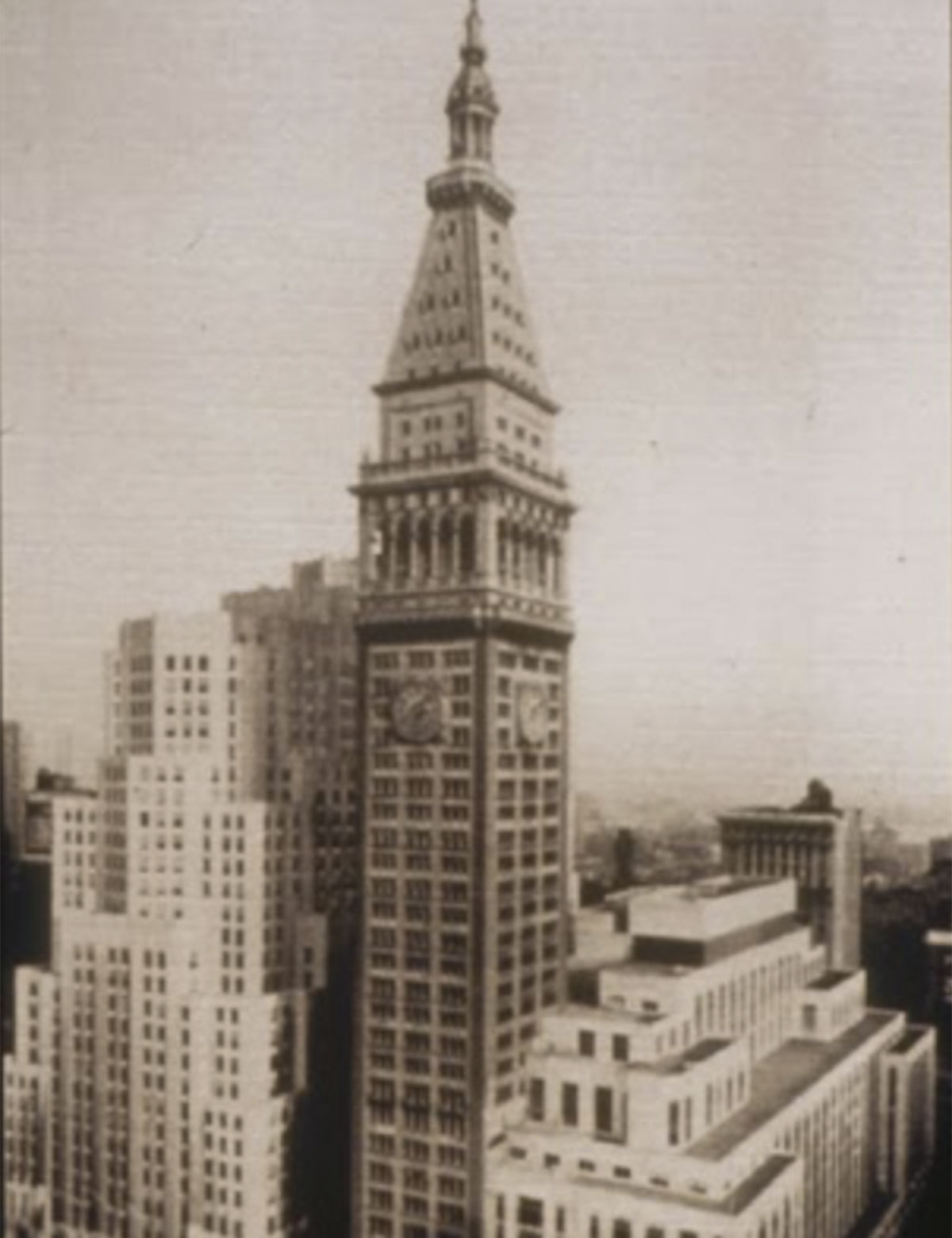
NoMad through the ages
There’s no place like NoMad
A hotbed of who, what, and where, NoMad is the quintessential live-work-play-learn neighborhood. The area — which first rose to fame during the Gilded Age — was once a best-kept secret among those in the know. But today, the secret is out. Of all the neighborhoods in Manhattan, there truly is no place like NoMad.
Why the name NoMad? The moniker — No (north) and Mad (Madison Square Park) — was coined by The New York Times in 1999 soon after the city had formally established the Madison Square Park North Historic District.
NoMad through the ages
The early history of NoMad is closely aligned with the birth of Madison Square Park, which has been a public space since 1686. Stretching from Fifth Avenue to Madison and tucked between 23rd and 26th, the park was — and continues to be — an anchor for the area’s development. NoMad first became a crossroad of the city at the end of the 18th Century, when the main route to New England split from Broadway near what is now 23rd Street.
By the middle to end of the 19th Century, New Yorkers were establishing residences along the park’s borders, giving rise to private brownstones and mansions owned by a contingent of respected and wealthy families. This period — known as the Gilded Age — saw the neighborhood emerge as a hub of cultural and social exploration; a harbinger of what NoMad is today. A table at Delmonico’s was a hot ticket in the mid-1800s; Lillian Russell, Mark Twain, Oscar Wilde, and J.P. Morgan were among the well-heeled and famous who frequented the famous eatery. During this same time, a who’s who of global society enjoyed the area’s nightlife, theater, and shopping — the area was once home to the infamous Ladies Mile. Residents and visitors rubbed shoulders with Thomas Edison, Scott Joplin, Teddy Roosevelt, Diamond Jim Brady, and opera singer Jenny Lind at any number of high-end establishments.
NoMad key dates through the ages
1859 The first passenger elevators were installed in the Fifth Avenue Hotel (200 Fifth Avenue).
1876-1882 The Statue of Liberty’s torch-holding arm stood in Madison Square Park to help raise funds for the completion of the statue’s base (northwest corner of Madison Square Park).
1876-1899 Delmonico’s restaurant was the place to see and be seen (Fifth Avenue and 26th Street).
1877 The first Westminster Kennel Club Dog Show was held at Gilmore’s Garden (Madison Square Garden in Madison Square Park).
1890: Madison Square Garden II is built (Madison Square Park) on the northeast corner of 26th & Madison.
1890-1901 The glory years of Tin Pan Alley (though many writers preferred the moniker Melody Lane) defined
the American Songbook. Innumerable hits from composers and lyricists were born from the likes of Harold Arlen, Irving Berlin, Sammy Cahn, Hoagy Carmichael, George M. Cohan, Dorothy Fields, George & Ira Gershwin, Scott Joplin, Jerome Kern, Johnny Mercer, Cole Porter, Fats Waller, and more (28th Street between Fifth and Sixth Avenues).
1890s “The Great White Way” thrives along Broadway and 23rd Street.
1900 America’s First Major Auto Show held in the old Madison Square Garden (Madison Square Park).
1906 Architect Stanford White shot to death in the rooftop restaurant at Madison Square Garden by millionaire Harry Kendall Thaw. Thaw was enraged over White’s affair with his wife, Evelyn Nesbit, “The Girl on the Swing” (Madison Square Park).
It wasn’t, however, all upscale. Tin Pan Alley, a stretch of West 28th Street, was an epicenter for musicians, composers, and sheet music publishers between 1893 and 1910. And the area west of Broadway was home to an astonishing number of brothels and gambling parlors. Dubbed Satan’s Circus, the area catered to both rich and poor, leading to an eclectic mix of humanity — from high society to denizens of the underbelly — and, in true New York fashion, it all came together in a blending of creativity, culture, genre.
NoMad now
While NoMad has witnessed both highs and lows through the decades, its current renaissance began with the creation of the Madison Square Park North Historic District in 1999. A vibrant mix of food, shopping and fashion, design, tech, entertainment, architecture, and unique museums gives NoMad its distinct character.
While the neighborhood has shied away from the ubiquitous franchised offerings that can be found elsewhere in the city or the US — it has nevertheless been the incubator for what are now internationally known offerings, including Eataly, Shake Shack, The James Hotel, and the NoMad Hotel. These brands, along with a growing inventory of one-of-a-kind establishments come together to make NoMad the distinctly exciting destination it is today.
A sampling of what the neighborhood has to offer:
NoMad for foodies
One year before The New York Times officially dubbed the area NoMad, world-renowned chef Danny Meyer opened Eleven Madison Park in the Metropolitan Life Building across from Madison Square. The restaurant quickly became a foodie destination, earning three Michelin stars and a place at the top of the list of the world’s 50 best restaurants. Soon, other high-profile eateries cropped up in the area and today, there are a growing number of notable Michelin-starred and James Beard-awarded chefs in the kitchens of NoMad, including:
José Andrés — Zaytinia, Nebulez
Rick Bayless — Tortazo
Ok Dongsik — Okdongsik
Markus Glocker — Koloman
Sol Han — Little Mad
Daniel Humm — Eleven Madison Park
Roberto Romero — Omakaseed
But it’s not all fancy dining. Danny Meyer’s iconic Shake Shake, currently at 400+ locations worldwide, originated in Madison Square Park. Also, Koreatown’s offerings are not to be missed. Centered around 32nd Street between Madison Avenue and Broadway, K-town is home to some of the best and most authentic Korean dishes in the city. NoMad’s vegetarian/vegan scene is also growing in both fine dining and quick eats establishments, from Eleven Madison Park to Planta Queen to Omakaseed to Avocaderia to Seeyamañana, and more.
Recently, Michael Oshman, founder of the Green Restaurant Association, decided the area would be ideal as a Green Dining Destination. Together with the Madison Square Park Conservancy and the Flatiron/NoMad Partnership, the group is working to reduce the area’s carbon footprint and establish it as a role model in yet another important facet of city culture. It’s yet one more way that NoMad is becoming the neighborhood of the future.
NoMad key dates through the ages (continued)
1907 The Interurban Woman Suffrage Council established its headquarters in The Redbury/Martha Washington Hotel (29 East 29th Street).
1908 The Colony Club, New York’s first women-only social club opens (120 Madison Avenue at 30th Street).
1913 The world’s first modern art exhibition took place featuring Picasso, Manet, Matisse, Duchamp, and Degas (69th Regiment Armory on Lexington Avenue between 25th and 26th Streets).
1920-1933 Urban legend holds that Harpo Marx worked as a bellboy at the Seville Hotel and wrote several skits based on his experiences (now the site of the James Hotel NoMad at 29th Street and Madison Avenue).
1963 The American Academy of Dramatic Arts (AADA), the first school dedicated to acting in the English- speaking world moves to NoMad. Well-known attendees include Lauren Bacall, Cecil B. De Mille, Danny DeVito, and Robert Redford (120 Madison Avenue at 30th Street).
1976 Annex Antiques Fair and Flea Market opens at 29 West 25th Street, currently the site of Chelsea Flea. Andy Warhol and other artistic icons were frequent shoppers. This destination helped the area establish a stronghold.
1998 Danny Meyer’s Eleven Madison Park and Tabla open in the Met Life Building on Madison Avenue.
1999 Article in The New York Times “The Trendy Discover NoMad Land, and Move In.”
2001 New York City formally establishes the Madison Square North Historic District. Danny Meyer opens the “first” Shake Shack as a hot dog cart inside Madison Square Park.
2002 Museum of Sex opens at 233 Fifth Avenue.
2004 Shake Shack opens a permanent kiosk in Madison Square Park and expands its menu to include hamburgers, fries, and milkshakes along with New York-style hot dogs.
NoMad hospitality
NoMad hospitality has been a calling card of the neighborhood for over a century, as well. The Fifth Avenue Hotel originally at 200 Fifth Avenue led the way in innovation with its installation of the first passenger elevators in 1859 and the new Fifth Avenue Hotel at 250 Fifth Avenue is a beautifully restored landmark. The building continues to offer exquisite service and accommodations. A century-and-a-half later, with the openings of the Ace Hotel New York City, the Royalton Park Avenue, the Park South Hotel, the Evelyn Hotel, and the NoMad Hotel, the area established itself as a geographically desirable tourist destination, bringing new life and a trendy vibe to the streets.
In recent years, luxury accommodations at the James Hotel NoMad, Arlo NoMad, Ritz-Carlton NoMad, Le Meridien Fifth Avenue, Virgin Hotel NoMad, and the exclusive members-only Ned NoMad continue to raise the area’s profile. These beautifully appointed hotels — many offering spa-like amenities and boasting highly Instagrammable interiors and public spaces — have cemented NoMad’s place on the global hospitality map.
NoMad architecture and design
The streets of NoMad reveal both a rich history and a promising future. Over the last two decades, the NoMad Design District has blossomed. Historically significant buildings — many of which have been painstakingly restored — from architects McKim, Mead, & White (The New Fifth Avenue Hotel’s 2nd National Bank, Colony Club, and Madison Square Garden in Madison Square Park), Harry Allan Jones (The James Hotel), Bruce Price (The St. James Building), Cyrus L. Eidlitz (The Townsend Building), and Robert W. Gibson (The Redbury) have gone a long way toward creating a neighborhood that is both aesthetically cohesive and highly functional. The late great architect Rafael Viñoly left his mark in NoMad with 277 Fifth Avenue and The Ritz Hotel NoMad.
The area is also home to flagship designer showrooms offering both contemporary and modern furniture and fixtures from Herman Miller, Vitra, Poliform, B&B Italia, DDC, Minotti New York, Kohler, and the Manhattan Center for Kitchen and Bath.
Culture, art, fashion, books
The progressive artistic culture of the neighborhood is another calling card. In 1913, the world’s first modern art exhibition featuring Picasso, Manet, Matisse, Duchamp, and Degas took place at the 69th Regiment Armory on Lexington Avenue. In the mid-1970s, the Annex Antiques Fair and Flea Market at 29 West 25th Street drew creatives, like Andy Warhol, who were looking for inspiration and modern heirlooms. Today, Chelsea Flea carries on the tradition in the same footprint. Across the street, Showplace is a valuable resource for art, design, fashion, and vintage treasures, with bi-weekly estate auctions.
The strikingly juxtaposed disciplines of the creative class thrive throughout NoMad. On 29th between Fifth Avenue and Broadway, for example, CFDA-honored designer Yeohlee’s exclusive fashion designs are housed just a few steps away from MAISON 10’s art gallery and concept store. Along the NoMad Piazza, the iconic Rizzoli bookstore hosts regular book signing events that bring in a continuous flow of thought-leaders and creative luminaries to the area. Younger creatives — and the young at heart — explore and build imaginative visions at the Lego flagship store on 23rd Street and Broadway.
Rounding out this cultural mix are the National Museum of Mathematics, the Museum of Sex, and Fotografiska — all of which are great examples of the unique culture and diverse offerings within the boundaries of NoMad.
NoMad living
Living in NoMad is anything but nomadic, and the neighborhood is now home to an eclectic population of boldface names — think Jeff Bezos and Jennifer Lopez — and multi-generational family units. The neighborhood’s highly desirable housing market speaks to a broad demographic that includes celebrities, young families, society mavens, retirees, and upwardly mobile professionals. Everything you might desire can be found close at hand — especially in some of NoMad’s newest luxury high-rise residential buildings, like Rose Hill and Madison House.
With its unique culture, creativity, culinary offerings, services, shops, and more, it’s no wonder NoMad continues to make headlines. Living in the neighborhood is endlessly inspiring, exciting, and convenient. It is the quintessential New York experience — and why more and more people are saying, “there’s no place like NoMad.”
NoMad key dates through the ages (continued)
2009 Ace Hotel opens at 20 West 29th Street.
2010 Oscar Farinetti’s Eataly, a collection of cafes, counters, shops, and a cooking school opens its first location in New York City. Royalton Park Avenue opens at 420 Park Avenue South.
2012 NoMad Hotel opens, marking a turning point for the 2012 neighborhood as it evolves from a bargain wholesale district to the rich and vibrant epicenter of Midtown. National Museum of Mathematics adds a fun, educational spin to the area at 11 East 26th Street.
2014 NoMad’s Gershwin Hotel is rebranded as The Evelyn, after the famous 1900s chorus girl Evelyn Nesbit. Lego Flagship Store opens on 23rd Street and Fifth Avenue. Chef Enrique Olvera’s restaurant Cosme debuts with a contemporary look and a menu that veers away from tradition.
2015 The Edition Hotel Flatiron opens in the former MetLife Clocktower Building.
2016 Arlo NoMad, with its epic views and stylish rooms, opens at 11 East 31st Street.
2017 James Hotel NoMad debuts in the space at 22 East 29th that was home to the Hotel Seville in 1904 and The Carlton Hotel (part of the Marriott Autograph Collection) in 1987.
2021 Eleven Madison Park relaunches with a plant-based menu and a solid commitment to healthier eats.
2022 Ned NoMad, situated at 1170 Broadway, in the 1903 Beaux Arts Johnston Building, rises from the site of the scene-making Nomad Hotel and opens to stellar reviews. Ritz-Carlton NoMad, at 25 West 28th Street brings its successful luxury hotel formula to the neighborhood, along with Chef José Andres‘s Zatinya, Nubeluz, and Bazaar.
2023 The newest in a long lineup of innovative hotel spaces, Virgin Hotel makes its mark with a trendy boutique game plan and a sky lounge with stellar views.